
Psalms in Book 5 affirm that God does answer prayer, God’s promises are valid and they include a long love song for God’s laws. The final 5 Psalms are songs of praise believed to have been written to be sung at the dedication of the second temple.
The last psalm in the book of Psalms is a song of praise, praise and more praise. In a short song of only 6 verses praise is mentioned 13 times. Talk about going out with a bang.
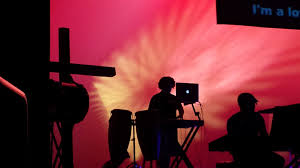
The books of Psalms are roughly themed like this:
Book 1: Psalms 1 – 41: God is beside us.
Book 2: Psalms 42 – 72: God goes before us
Book 3: Psalms 73 – 89: God is all around us.
Book 4: Psalms 90 – 106: God is above us.
Book 5: Psalms 107 – 150: God is among us.
150 Praise the Lord!
Psalm 150 ESVUK
Praise God in his sanctuary;
praise him in his mighty heavens![a]
2 Praise him for his mighty deeds;
praise him according to his excellent greatness!
3 Praise him with trumpet sound;
praise him with lute and harp!
4 Praise him with tambourine and dance;
praise him with strings and pipe!
5 Praise him with sounding cymbals;
praise him with loud clashing cymbals!
6 Let everything that has breath praise the Lord!
Praise the Lord!
Praise is incredibly important. In Psalm 150, the final psalm in the psalter, praise takes center stage, with the word “hallel,” translated from Hebrew as praise, appearing thirteen times in just 13 brief verses. These verses are notably concise, containing only six or seven words in Hebrew. This emphasizes the significance of praise, with it accounting for one in every three words in the original text. This abundance of praise is truly remarkable.
Psalm 150 has the what, where, why, how, and who of praise.
WHAT?
Praise the Lord!
Hallelujah is a powerful exclamation that means “Praise the Lord.” It beautifully begins and ends the last five psalms, signifying the spirit of joy and gratitude. This song resonates with the celebration of praise and emphasises the significance of expressing gratitude.
WHERE?
Praise God in his sanctuary;
praise him in his mighty heavens
Praise is the beautiful symphony we create in the presence of God. The sanctuary stands as the holy ground in the Temple, filled with the cloud his divine presence. The majestic heavens, the highest of all, resound with the continuous worship of angels adoring God. Even in our solitary praise, we unite with countless others on Earth and harmonize with the celestial angels above. We cannot praise God on our own.
But above all, we are summoned to unite and exalt God in His presence. In ancient times, it was in Jerusalem. However, Jesus proclaimed that His presence is wherever believers gather to worship. Let us never neglect coming together to honor and adore God. In a church, in a house, on line: It all counts.
WHY?
Praise him for his mighty deeds;
praise him according to his excellent greatness!
Praise is due because of what God has done and for who God is.
Why not take a moment now to reflect on something that God has done or is currently doing for you personally, or for someone else, or for a group of people?
Now consider a facet of God that has supported you: whether it’s God’s grace, forgiveness, or love. Incorporate this into the deeds of God that you have just acknowledged. Reach out to someone and express praise to God together. The expression does not need to be articulate.
HOW?
Praise him with trumpet sound;
praise him with lute and harp!
Praise him with tambourine and dance;
praise him with strings and pipe!
Praise him with sounding cymbals;
praise him with loud clashing cymbals!
Praise can be expressed through the use of eight different kinds of instruments plus dancing, it says here. Six of them are known to us. The remaining two, referred to by their Hebrew names, remain a mystery. Nevertheless, it is widely believed among Rabbis that one of these instruments symbolizes the idea of “Praise on all kinds of instruments.” (For further insight, you can watch a video at the link provided, particularly at the 4-minute mark).
All kinds of instruments! Not just organs – though organs have an exceptional history of being used to praise God – and not just instruments that existed in the Biblical period. All kinds! Organs were not common in churches in the 18th century, except in cathedrals and parish churches in larger towns and cities, but they eventually replaced the worship bands of local musicians playing whatever they owned. Contemporary worship doesn’t look that contemporary when you know your church history. And believe it or not, there’s even 18th-century worship music for guitar!
An aside: Accusations of musicians showing off during worship time may be true. Psalm 33:3 emphasizes playing skillfully on an instrument of music, highlighting the need for a balance between utilizing skill for playing and avoiding self-glorification. The glory should belong to God alone. Rant over.
WHO?
Let everything that has breath praise the Lord!
Praise the Lord!
“Everything that has breath” is a phrase from Genesis 1:30
And to every beast of the earth and to every bird of the heavens and to everything that creeps on the earth, everything that has the breath of life, I have given every green plant for food.” And it was so.
So, every living thing that breathes air should praise God, including the sea monsters as mentioned in Psalm 148. And what about the fish? They will declare the things of God to us, according to Job 12:8. Remember, everything God has made praises Him and is truly worth praising for.
Breath and spirit are synonymous in Hebrew, highlighting the close connection between them. Could the psalmist possibly intend to convey that those with God’s Spirit should offer praise to God? Absolutely, and there’s more to it as well. I’ve discovered an additional layer of meaning among the Rabbis, which adds depth to this discussion. After all, the Psalms serve as a Jewish hymnbook.
“A person’s entire soul must be dedicated toward one goal: praising G-d!” proclaims Rabbi Dr. Tzvi Hersh Weinreb, in the above link. I firmly believe that every fibre of our being, body, soul, and spirit, should resound with the exaltation of God. Let every thought, every action, and every word flow with the fervent praise of God.
Amen.
< Psalm 149 | Psalm 150 | Other psalms >
 Making an ass of myself