
John 1:3
Who is Jesus? part 6
John might be taking his sweet time here, but who can blame him? He’s telling the story of the birth of Jesus, and let’s face it, that’s no small task. It’s a mix of philosophy, poetry, and probably a sprinkle of magic too. And hey, if you didn’t notice, he’s so into this poetry thing that he’s saying everything twice! That’s some next-level commitment. It’s like Hebrew poetry, without rhymes – just good old word repetition. If you’re into poetic forms, I even delved into it in part 5. Yep, we’ve got it all covered here!
But this nativity story is no run-of-the-mill tale. It’s like a catchy tune about who Jesus is, that’s what John is driving at in these initial five verses. If we peek past the deep thoughts to the actual song, it’s quite a delightful piece of work.
3 All things were made through him, and without him was not any thing made that was made.
John 1:3 ESVUK
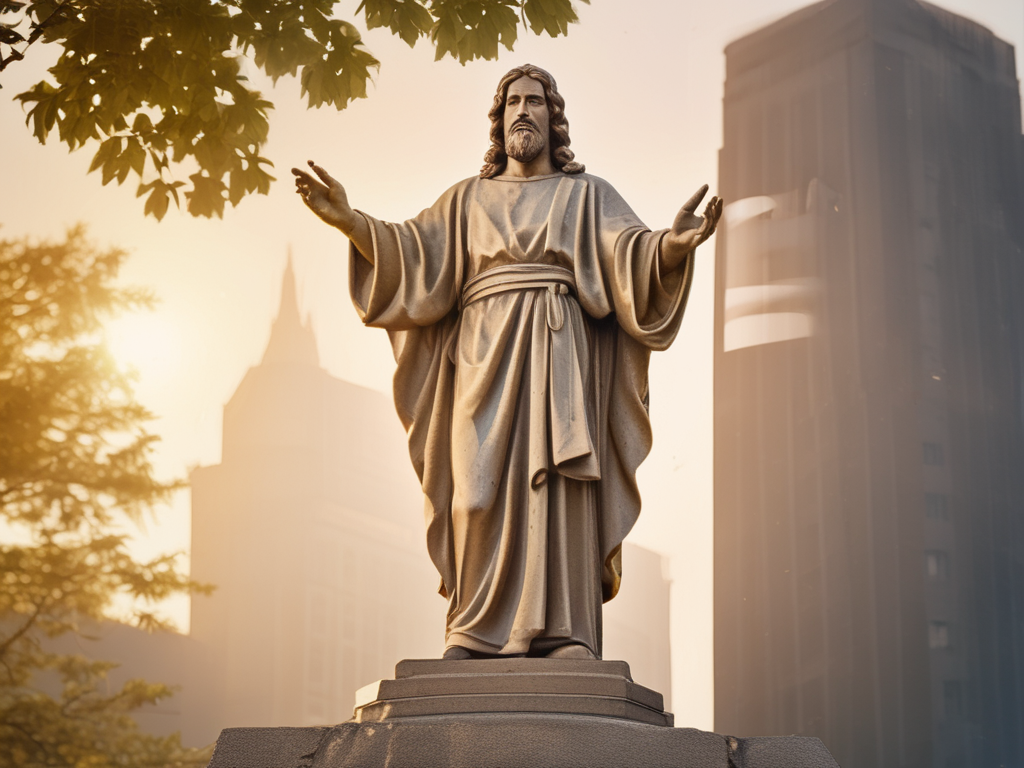
It’s a beautiful thing expressed poetically, far from the austere image that AI has generated.
Spoiler alert: Jesus Christ is like the ultimate author behind the scenes (v. 3). But before we dive into the big reveal, let’s talk about the grand opening act of creation.
There is a compelling parallel between John 1:1 and Genesis 1:1, highlighting the concept of God creating the world through his word: “And God said, ‘Let there be … and there was.'” Verse 3 further deepens this parallel by drawing from the Psalms in both content and style, “By the word of the Lord the heavens were made and by the breath of his mouth all their host … For he spoke, and it came to be; he commanded, and it stood firm.” (Psalm 33:6, 9). It’s fascinating to note how the verses in Psalm 33 are both in two parts, the first five verses in John’s Gospel echo this.
Creation is a continual process, as indicated in Psalm 33: “He gathers the waters of the sea as a heap; he puts the deeps in storehouses.” Even though John uses the word ‘made’ in Greek in the perfect tense, giving the impression that creation is complete, it’s important to recognize that creation is an ongoing work.
We have a choice here. Both Psalm 33:7 and John 1:3 are poetic so that they seem to be saying different things is not a problem. Just take poetic licence into consideration and choose a side. If you think creation was complete you have to allow for God to still be active in creation, there are a lot of hoops to go through to make that theory stick. If you say God is still actively creating then you have to admit that it has been more intense than it is now. In neither of these passages is creation the point: Psalm 33 is a song of praise for God’s love and John 1:1-5 is a nativity song, albeit a strange one.
So far, the message is that the Word is synonymous with God and was intimately involved in the entire creation process. In fact, the Word is the very embodiment of the creation process. As we reach the midpoint of this magnificent creation song, it’s exciting to anticipate what is yet to be revealed and what this song truly signifies.
We will also find out why that AI picture is so inappropriate.
< Previous | The Gospel of John | Next >
 Making an ass of myself