
Psalms not in the Psalter
The 10 songs: Song 3
These are the 10 songs of Judaism. Among them, two are found in the Psalter, and one is the Song of Solomon or Song of Songs, which I plan to delve into separately. It’s also important to note that the last song, the Song of the Messiah, according to Jewish custom, has never been sung, as it is reserved for when the Messiah is present.
This is an occasional series. I will add to the links as each song is blogged.
Suddenly, the Book of Numbers reveals its poetic side in Chapters 21 to 24, adding a touch of beauty to the narrative. The appearance of these poems may seem unexpected, but they coincide with a transitional period in the book, marking the beginning of a new phase. The earlier sections focused on holiness as the Israelites prepared to break camp.
The subsequent part delves into the desert wanderings and the numerous challenges faced by Moses and the people, leading up to the poignant events in Chapter 20, which include the deaths of Miriam and Aaron. Following this, the narrative shifts to the conflicts with other nations intent on thwarting the Israelites’ journey to the promised land. The Song of the Well, a symbol of triumph, is sung following the victory in the initial battle.
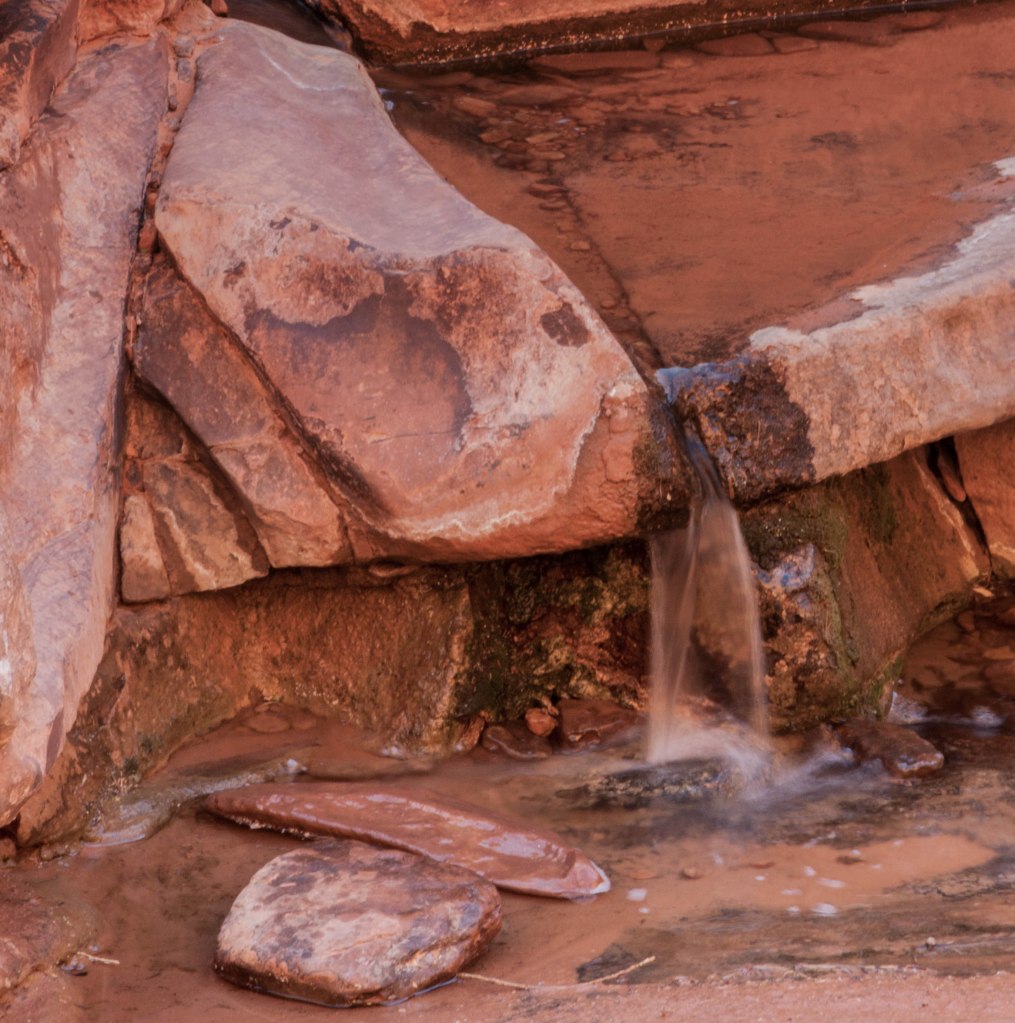
Free image from Wikimedia Commons
10 And the people of Israel set out and camped in Oboth. 11 And they set out from Oboth and camped at Iye-abarim, in the wilderness that is opposite Moab, towards the sunrise. 12 From there they set out and camped in the Valley of Zered. 13 From there they set out and camped on the other side of the Arnon, which is in the wilderness that extends from the border of the Amorites, for the Arnon is the border of Moab, between Moab and the Amorites. 14 Therefore it is said in the Book of the Wars of the Lord,
“Waheb in Suphah, and the valleys of the Arnon,
15 and the slope of the valleys
that extends to the seat of Ar,
and leans to the border of Moab.”16 And from there they continued to Beer; that is the well of which the Lord said to Moses, “Gather the people together, so that I may give them water.” 17 Then Israel sang this song:
“Spring up, O well!—Sing to it!—
Numbers 21:10-18
18 the well that the princes made,
that the nobles of the people dug,
with the sceptre and with their staffs.”
Beer, (in verse 16), or Be’er in some translations, is not likely to be the name of a town. In reality, it just means “well.” So, no, it’s not a magical land of pubs and frothy brews. It’s simply a spot where there happened to be a well. How’s that for a party pooper? Cheers to thirsty travellers!
Not just a place with a well? We know from the other geographical references that they were coming up the eastern side of the Dead Sea, about halfway up, as they had passed the Arnon River.
Water flowed from a rock in the Exodus account not once, but twice. The first was in the Sinai desert before Moses went up the mountain. Despite celebrating God’s victory, they soon turned on Moses when their water supplies ran out in the desert. In response, God instructed Moses to strike a rock, from which water miraculously gushed forth (Exodus 17). The second incident occurred towards the end of their journey, demonstrating a similar rebellion (Numbers 20:2-13). This time, God instructed Moses and Aaron to speak to the rock, but Moses, affected by the people’s grievances, struck the rock instead, twice, resulting in water flowing out once again.
There was an earlier incident involving water. Shortly after God had saved the Israelites at the Red Sea crossing, and after three day’s journey towards Mount Sinai, they found an oasis, but the water was undrinkable. In a moment of need, God commanded Moses to throw wood into the water, which miraculously became fresh. (Exodus 15). I think a chocolate hobnob to dunk would have been nice too.
God generously provided food and water during many years of wandering in the desert, showing great compassion for His people. At Beer, a special sense of gratitude and joy filled the air as Moses gathered the people at the well, and together they sang a beautiful song, expressing their longing for life-giving water.
Living Water
They were asking for what God had provided in the desert. Living water. Water that flowed. Lovely delicious water from a spring, not the disappointing stagnant well water, which would often be brown and muddy. Sometimes wells ran dry. Again God provided not just what they needed but more than what they wanted. Life-giving water. Living water.
Fast forward to another well, this time in Samaria. The disciples have gone to find food, leaving Jesus by the well. A woman came to draw water, and Jesus kindly offered her fresh running water.
Jesus, in using the term “living water” to foreshadow the arrival of the Holy Spirit, spoke with deep meaning. However, it’s understandable that the woman did not grasp this significance initially. After all, in her world, “living water” simply referred to flowing water, contrasting the still water found in wells. It’s uncertain whether the woman ever truly comprehended Jesus’ allusion to living water, and it’s likely that others Jesus spoke to were similarly confused. While they may have recognized him as a prophet or even the Messiah, the concept of the Holy Spirit’s promise likely eluded them. Jesus’ words provoked a strong reaction even when his audience may not have fully understood his message.
It’s the same now. Some people never understand. They say that living water symbolizes spiritual nourishment drawing on the life-giving properties of water to represent the spiritual refreshment that comes from accepting Jesus’ teachings. But it isn’t about following teachings, is it? That is important, but there is more going on here. Jesus said that living water is not something we can get for ourselves by rule-following. He says, “The water that I will give him will become in him a spring of water welling up to eternal life.” Jesus gives the Holy Spirit, it is not our doing.
In the desert, God provided the Israelites with fresh water. It was not their doing. The song of the well, asking for God’s water, is a song of praise for this provision: They didn’t even complain about the lack of chocolate hobnobs (They hadn’t been invented yet). The Holy Spirit has been poured out on the church. The Spirit Jesus promised to send is available to those who ask.
Ask Jesus to provide you with the Holy Spirit again, or for the first time.
The 10 songs:
Ps 92
Exodus 14:30-15:19
Numbers 21:16-18
Deuteronomy 32:1 – 32:52
Referenced in: Joshua 10:12-15,
Judges 4:4-5:31
I Samuel 2:1-10
2 Samuel 22; Psalm 18
Song of Songs
Song of the Messiah Isaiah 9:2-7, 26:1
 Making an ass of myself