
Understanding atonement
Lent 2024 – Part 3, A ransom paid to Satan
This Lent, I reflect deeply on the profound significance of Jesus Christ’s death and resurrection, exploring the various theories embraced or historically cherished by Christian churches. I realize that this journey reveals a rich tapestry of beliefs and interpretations. It’s important to acknowledge that there is more than a single perspective, and for those who have engaged in discussions about them, there are way more than the two you have argued over.
Changing what you believe about atonement is not denying Jesus. The gospel is not a description of how Jesus’ death (and resurrection, ascension, and enthronement) rescues the world, but that it does so. The gospel is not a theory or advice, it is news.
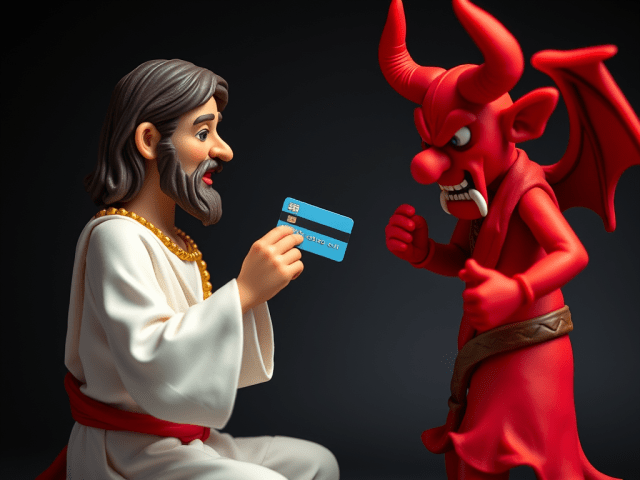
This is one of five theories that look at Jesus paying a ransom, which developed over time.
- The ransom was paid to Satan
- The ransom was paid to God
- Satisfaction
- Penal Substitution
- Governmental
The earliest of these ideas was thoughtfully presented by Origen of Alexandria (c. 185 – c. 253), and it resonates well with the Recapitulation theory, Jesus as the second Adam showcasing a rich intellectual dialogue of that time. (See part 2 of this series).
The Son of Man came not to be served but to serve, and to give his life as a ransom for many.
Matthew 20:28 ESVUK
5 For there is one God, and there is one mediator between God and men, the man Christ Jesus, 6 who gave himself as a ransom for all, which is the testimony given at the proper time.
1 Timothy 2:5-6
The great thing about the ransom theory is its simplicity.
Ransom theory beautifully suggests that Adam and Eve, in their moment of vulnerability, inadvertently entrusted humanity to the devil during the fall. However, this set the stage for a magnificent act of redemption: justice required that God pay a ransom to reclaim us. The death of Jesus stands as that profound and transformative sacrifice, illuminating our path to hope and restoration.
I told you it was simple.
Ransom Theory never stood alone. It beautifully intertwines with Moral Example Theory, showcasing Jesus not only as the one who paid the ransom but also as an inspiring model for humanity. This theory shines a light on the profound significance of the cross, celebrating what Jesus accomplished for us through his selfless sacrifice.
This beautiful concept of redemption, much like reclaiming something dear at a pawnbroker, represents a wonderful opportunity for renewal (in contrast to the grand scale of creation’s redemption in Recapitulation theory). Salvation, akin to being joyfully rescued from the sea by a lifeguard, carries even greater significance. By God’s boundless mercy, we experience redemption, with our sins graciously blotted out. Through God’s amazing grace, we are not only saved but also gifted with an incredible honour: we become sons of God. Yes, sons! This includes daughters too, as both share in the inheritance, transcending the societal norms of the past during the times the Bible was written and in Origen’s era.
In today’s Britain, where daughters have the same opportunity to inherit as sons, I genuinely believe we have a compelling reason to thoughtfully reconsider our language. It’s important to approach this matter with care, as we are not just God’s children; we are united in our shared inheritance of the Kingdom of God.
Ransom theory was the inspiring dominant theory leading up to the time of Anselm of Canterbury, whose insights we’ll explore further after discussing the intriguing dynamics of who needed to pay the ransom to whom. Its emphasis on the cross reveals a profound understanding of redemption. Saint Augustine beautifully embraced both Ransom Theory and Recapitulation Theory, adapting his teachings based on the context to enrich our understanding of these concepts.
 Making an ass of myself