
Lent 2024 – Part 5, Satisfaction Theory
This Lent, I reflect deeply on the profound significance of Jesus Christ’s death and resurrection, exploring the various theories embraced or historically cherished by Christian churches. I realise that this journey reveals a rich tapestry of beliefs and interpretations. It’s important to acknowledge that there is more than a single perspective, and for those who have engaged in discussions about them, there are way more than the two you have argued over.
Changing what you believe about atonement is not denying Jesus. The gospel is not a description of how Jesus’ death (and resurrection, ascension, and enthronement) rescues the world, but that it does so. The gospel is not a theory or advice, it is news.
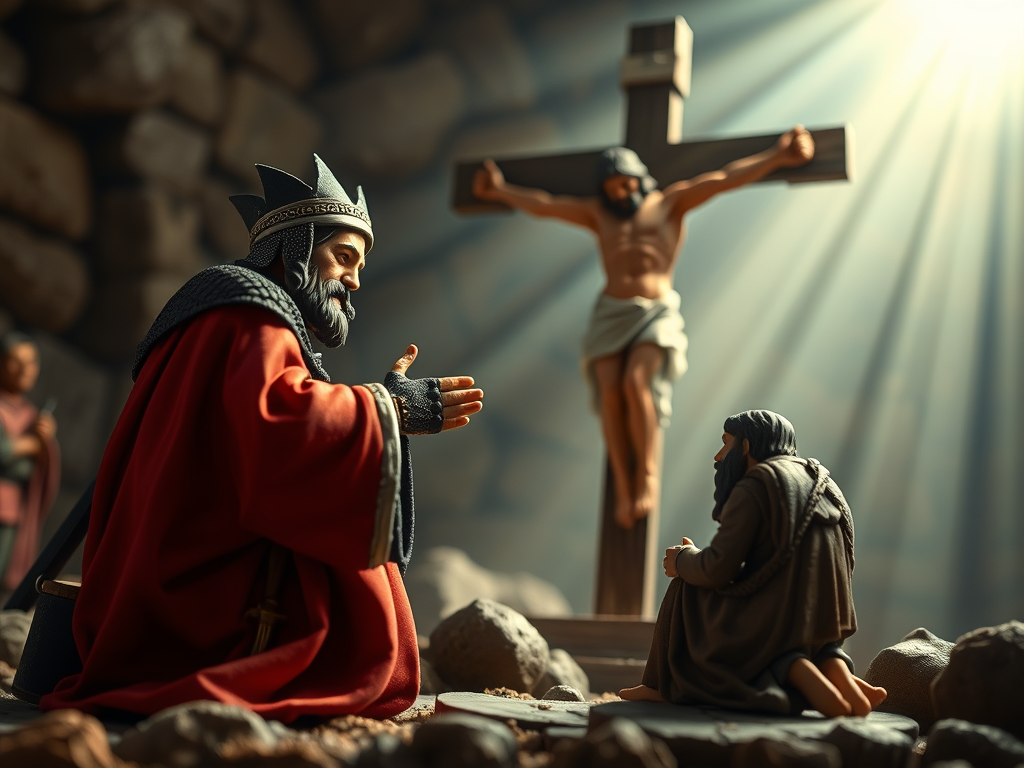
This is one of six different theories that look at Jesus paying a ransom which developed over time.
- The ransom was paid to Satan
- The ransom was paid to God
- Satisfaction
- Penal Substitution
- Governmental
- Christus Victor
Mick Jagger couldn’t get no satisfaction in the 1965 song. However God can get satisfaction.
We owe a heartfelt gratitude to two medieval monks for the enlightening theory of Satisfaction. Anselm of Canterbury, a devoted Benedictine monk, theologian, and philosopher, served as Archbishop of Canterbury from 1093 to 1109, while Thomas Aquinas, a Dominican who lived from 1224 to 1274, also contributed significantly to this profound understanding.
The historical background is important. The Latin Western Church and the Greek Eastern Church split in the Great Schism of 1054, and the Norman conquests of Italy started in 999 and of Britain in 1066 set the framework for this work.
I often find it helpful to pause and reflect on a few verses of scripture at this juncture. However, I understand that the Satisfaction theory, while not rooted directly in scripture, indeed underscores important concepts using biblical references. It’s important to recognize that this theory is fundamentally a work of logic, inviting us to consider its implications thoughtfully.
Satisfaction holds a significant place in its historical context, emphasizing the importance of God’s honour being upheld rather than merely focusing on the idea of ransom. It draws from the feudal system, where serfs toiled on estates for a knight, who acted as their overseer. In this intricate relationship, the knight was also bound to honour the king, reflecting a deep interconnectedness and a sense of duty that resonates through the ages. This is a development of the lesser followed theory where Jesus paid a ransom to God.
Anselm envisioned God as a benevolent feudal king of the world, to whom everyone owes a deep sense of honor. While failing to honor God is seen as a sin, it serves as a reminder of the love and grace that surpass our shortcomings. Thankfully, the only one capable of addressing this debt is God himself, who chose to become man in order to fulfill his own perfect honor. Through Jesus, who led a life of innocence, the abundant merit of his actions is now graciously available to all believers, offering hope and redemption for everyone.
Anselm was challenged though: When asked why Jesus told us to forgive, “and forgive us our debts,
as we also have forgiven our debtors.” Alnselm replied:
There is no contradiction in this, because God is giving us the teaching in order that we should not presume to do something which belongs to God alone. For it belongs to no one to take vengeance, except to him who is Lord of all.
As a reflective exploration of kingship through the lens of contemporary images of authority, I find that Anselm’s theory offers valuable insights, even though it does face some theological weaknesses. It’s understandable that just 150 years later, Thomas Aquinas stepped in to revise and enrich these ideas, drawing upon the profound philosophy of Aristotle as his guiding light.
Here are the main differences:
- Aquinas argued that Christ’s sacrifice was primarily motivated by love for humanity, not just a need to satisfy divine honour.
- Unlike Anselm, Aquinas believed that Christ’s sacrifice offered more than was necessary to atone for human sin due to the infinite value of his divine nature.
- Aquinas acknowledged that humans can participate in the act of satisfaction through their own acts of repentance and charity.
Satisfaction is the main theory of the Roman Catholic Church.
 Making an ass of myself