
Jesus messes with the disciples
Who is Jesus? part 48 – John 4:27-38
One of my traits is that I can get really focused on something and lose track of time, often skipping meals. This isn’t great for someone with diabetes. Before marriage and diabetes, I sometimes had my late evening meal, my last meal of the day, which was also breakfast. I can concentrate like that.
What follows is the story of someone else who went without eating.
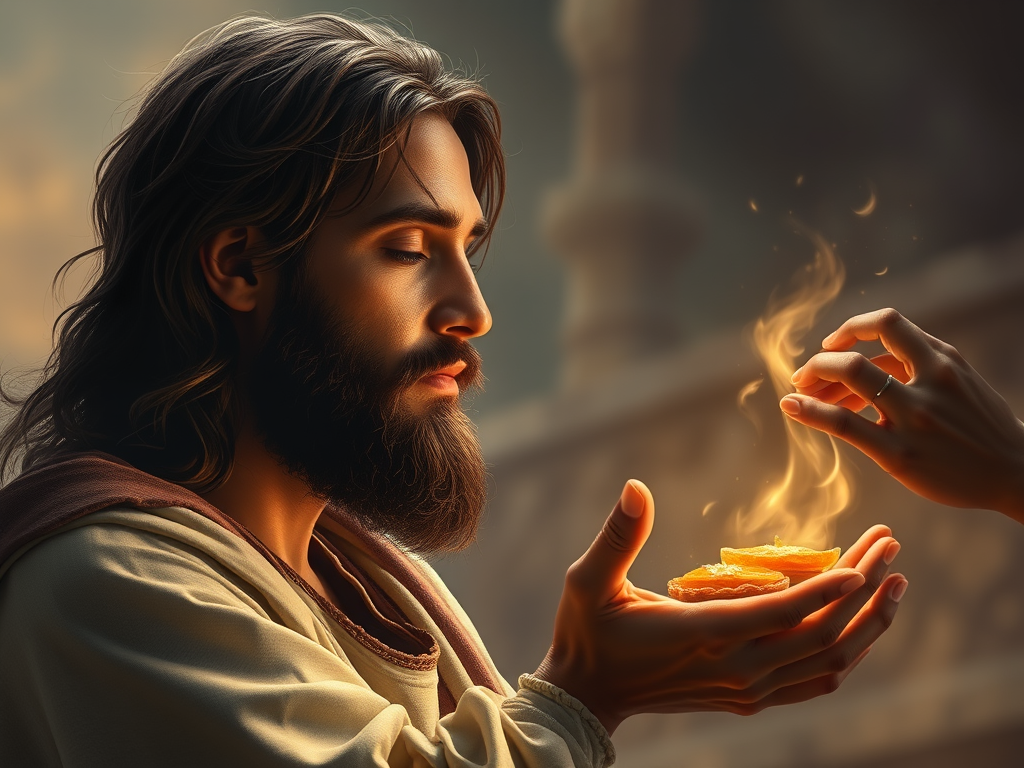
27 Just then his disciples came back. They marvelled that he was talking with a woman, but no one said, “What do you seek?” or, “Why are you talking with her?” 28 So the woman left her water jar and went away into town and said to the people, 29 “Come, see a man who told me all that I ever did. Can this be the Christ?” 30 They went out of the town and were coming to him.
31 Meanwhile the disciples were urging him, saying, “Rabbi, eat.” 32 But he said to them, “I have food to eat that you do not know about.” 33 So the disciples said to one another, “Has anyone brought him something to eat?” 34 Jesus said to them, “My food is to do the will of him who sent me and to accomplish his work. 35 Do you not say, ‘There are yet four months, then comes the harvest’? Look, I tell you, lift up your eyes, and see that the fields are white for harvest. 36 Already the one who reaps is receiving wages and gathering fruit for eternal life, so that sower and reaper may rejoice together. 37 For here the saying holds true, ‘One sows and another reaps.’ 38 I sent you to reap that for which you did not labour. Others have laboured, and you have entered into their labour.”
John 4:27-38 ESVUK
There is a structure to chapters 2 to 4. They are one big chiasmus. Chiasm, meaning crossing over, is a poetic form used in nearly all Psalms and is a repetition of similar ideas in the reverse sequence. Where there is a central section, here marked X, that is usually the focus of the poem.
A. John 2:1-11 Miracle at Cana – Water into wine.
B. 2:12-22 Temple cleansed – new Temple of his body.
C. 2:23-3:13 We must be born from above.
X. 3:14-21 God so loved the world that He gave His Son.
C’. 3:22-4:3 Christ comes from above.
B’. 4:4-46 Temple to be replaced by a new place of worship.
A’. 4:46-54 Miracle at Cana – healing of a nobleman’s son.
I’ve heard it said that John’s Gospel is the most spiritual of the four Gospels. While this may be true, it can overlook the humorous moments within it. Much of John’s Gospel features conversations where humour arises from natural human interactions. So, let’s not ignore the humour, as the message might be found in those funny exchanges.
This story, about food, punctuates the story of the woman at the well in Samaria. Which goes: Jesus talks to a Samaritan woman who, realising that he is the Messiah, tells anyone she knows, and a revival breaks out. This story is annoyingly punctuated by that story about food. Yet this is John’s Gospel, which is open about being just a few things about Jesus so that people will believe in him, and this interruption made the cut, not just because it really happened, but also because it is important in learning who Jesus is, or who the Holy Spirit is.
The fulfilment of the present moment
Many self-help books have been published since Eckhart Tolle’s bestselling book, The Power of Now, in the late 1990s, leading people to believe that ‘mindfulness’ is a recent concept. However, it is not new to Christianity. The Franciscans have discussed the importance of living in the present since medieval times, stating, “The human mind can only do two things: reprocess the past and worry about the future.”
Mindfulness is a Christian idea called the sacrament of the present moment or the grace of the present moment, depending on how catholic a Christian you are. We can see this fulfilled in this passage where the disciples come back with food.
The disciples return thinking Jesus is resting, but they are surprised to find him speaking with a Samaritan woman, which their culture sees as inappropriate. While the disciples focus on buying food, Jesus has a more important mission: revival is about to happen in Samaria, a place avoided by pious Jews. He teaches the disciples that they should live in the present and follow the guidance of the Holy Spirit.
In the sermon in Holy Trinity Church, Huddersfield last Sunday (19th November) we were told that people spend their time worrying about the future. (The sermon was on the Lord’s Prayer and he was talking about “Give us today our daily bread.”) I disagree. When I am awake at night I am worrying about my pain at that time. Chronic pain focusses the mind on the present, but I would not wish that on anyone.
Jesus is teaching about being open to the Holy Spirit and acting on the Spirit’s promptings in the present moment.
At Holy Trinity, Huddersfield, Vicar Mike, who has been with us for nearly 20 years, told of times when talking to people or when going into tricky situations he would make the short prayer, “Come Holy Spirit,” and how God had helped in those situation. Not because Christians do not have the Spirit but to ask for help and to be led.
Jesus was acting as a human empowered by the Holy Spirit. “Jesus, wearied as he was from his journey, was sitting beside the well,” (v6) shows his humanity. Was he still looking tired? The insistance of the disciples that he should eat suggests that he was still looking tired and hungry. “Rabbi, eat,” would be the normal reaction.
Jesus refuses the hot food from the shop. The story quickly shifts focus from this food joke. He has just seen his ministry succeed in an unexpected place. It’s important for the disciples to know there are more people eager to hear the Gospel than there are those who can spread it. The fact that even Samaria can experience a revival through a woman of questionable morals illustrates this point. We must pay attention to what people say, as there isn’t just one way to share the Gospel. However, we also need to communicate what the Holy Spirit is conveying. Jesus shares this with disciples who have not yet received the Holy Spirit, which will only happen after His death and resurrection.
The other Gospel writers clearly distinguish between disciples, who follow Jesus, and Apostles, the 12 chosen by Him. John’s Gospel blurs this distinction, which benefits us. We are all disciples and share in the Holy Spirit given to God’s Church. Jesus’ example of following the Spirit’s guidance, even when tired, shows us that we can do the same. If you find yourself in such situations, like me you may also need to quickly pray, “Come Holy Spirit.”
< Previous | The Gospel of John | Next >
 Making an ass of myself