
Disabled Jesus, part 1a
A Wounded Saviour: Solidarity part 1
Disability theologian Nancy Eiesland coined the term “the Disabled God” upon realising that the resurrected Jesus, who still bore the wounds of the crucifixion in his hands and side, represents a God who understands and lives within the experience of impairment.
27 Then he said to Thomas, “Put your finger here, and see my hands; and put out your hand, and place it in my side. Do not disbelieve, but believe.” 28 Thomas answered him, “My Lord and my God!”
John 20:27-28 ESVUK
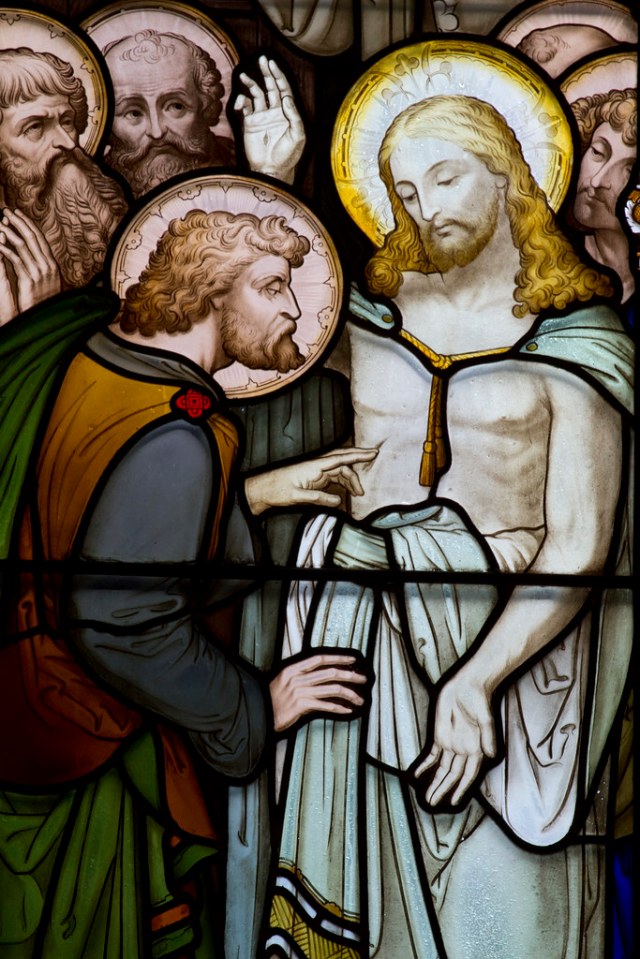
By Laurence OP on Flickr, shared on a Creative Commons licence
There is a lot of abuse of disabled people in churches done by well-meaning people who don’t know any better. They are victims of bad theology. And so, we disabled people become victims of bad theology.
I hope no one reading this believes what I’m about to say, but this bad theology goes like this: “1 As he passed by, he saw a man blind from birth. 2 And his disciples asked him, ‘Rabbi, who sinned, this man or his parents, that he was born blind?’ 3 Jesus answered, ‘It was not that this man sinned, or his parents, but that the works of God might be displayed in him.'” (John 9:1-3).
I’m not going to say that the Bible is wrong here; it is the disciples who equate the blindness of the man with sin, not Jesus. Perhaps they remembered Jesus saying to a paralysed man let down through a house roof. “Your sins are forgiven.” (Mark 2:1-12). Sin can be a factor in disability, but it cannot be assumed. Jesus treats each person individually; there is no simple formula. In the same way, I believe it is wrong to take the phrase, “It was not that this man sinned, or his parents, but that the works of God might be displayed in him,” and make it a formula that all disabled people should be healed. I believe that attitude is harmful and often abusive; yet it is common enough to trend highly in a Google search.
I know the reason for my disability. I was in a road accident while cycling home from work. Was that because of my sin? Probably not, though I have always been aware that I am far from perfect. Was it so that God could be glorified through my healing? I was prayed for by the church whilst in hospital and survived, for 20 years I have been alive but disabled, and I’m glad and thank God for my healing. I’m living bonus years after something near fatal.
When I see Jesus, I see the scars of his crucifixion still showing. That brings hope to me and my scarred body. I have lived through the valley of the shadow of death that is depression and found Jesus in the darkness. When Christ Jesus was raised, his resurrection body was changed, able to enter locked rooms. He could have been raised without the scars, yet they remained. They served as a sign to the disciples that this was the same Jesus who had been tortured and executed. Those scars, now glorified, symbolise his eternal love, sacrifice for humanity, and continued empathy with human suffering, representing a “trophy of victory” rather than a sign of weakness.
Jesus empathises with my suffering. Though I still get times of tears through pain, I get comfort from this.
<previous | The Passion of Jesus through the eyes of disability | next >
 Making an ass of myself