
The Cana wedding party and the Passover
Who is Jesus? Part 36, John 2:1-11
Have you noticed the passage I’m talking about? It’s the same passage again. The first time, I dealt with the obvious theme of obedience to Jesus. This time, I will briefly examine eight other points found in this short reading. Having written it, it’s too long, so I’m dealing with these points two at a time.
There is a structure to these three chapters. They are one big chiasmus. Chiasm, meaning crossing over, is a poetic form used in nearly all Psalms and is a repetition of similar ideas in the reverse sequence. Where there is a central section, here marked X, that is usually the focus of the poem.
A. John 2:1-11 Miracle at Cana – Water into wine.
B. 2:12-22 Temple cleansed – new Temple of his body.
C. 2:23-3:13 We must be born from above.
X. 3:14-21 God so loved the world that He gave His Son.
C’. 3:22-4:3 Christ comes from above.
B’. 4:4-46 Temple to be replaced by a new place of worship.
A’. 4:46-54 Miracle at Cana – healing of a nobleman’s son.
And now on to this week’s passage, again.
2 On the third day there was a wedding at Cana in Galilee, and the mother of Jesus was there. 2 Jesus also was invited to the wedding with his disciples. 3 When the wine ran out, the mother of Jesus said to him, “They have no wine.” 4 And Jesus said to her, “Woman, what does this have to do with me? My hour has not yet come.” 5 His mother said to the servants, “Do whatever he tells you.”
6 Now there were six stone water jars there for the Jewish rites of purification, each holding twenty or thirty gallons. 7 Jesus said to the servants, “Fill the jars with water.” And they filled them up to the brim. 8 And he said to them, “Now draw some out and take it to the master of the feast.” So they took it. 9 When the master of the feast tasted the water now become wine, and did not know where it came from (though the servants who had drawn the water knew), the master of the feast called the bridegroom 10 and said to him, “Everyone serves the good wine first, and when people have drunk freely, then the poor wine. But you have kept the good wine until now.” 11 This, the first of his signs, Jesus did at Cana in Galilee, and manifested his glory. And his disciples believed in him.
John 2:1-11 ESV UK
Here are 8 findings from this passage. You can create a three-point sermon from these 9 topics (there is another in the previous post), leading to 84 different combinations. If the order matters, there are 504 possibilities. This will give you plenty of sermon material.
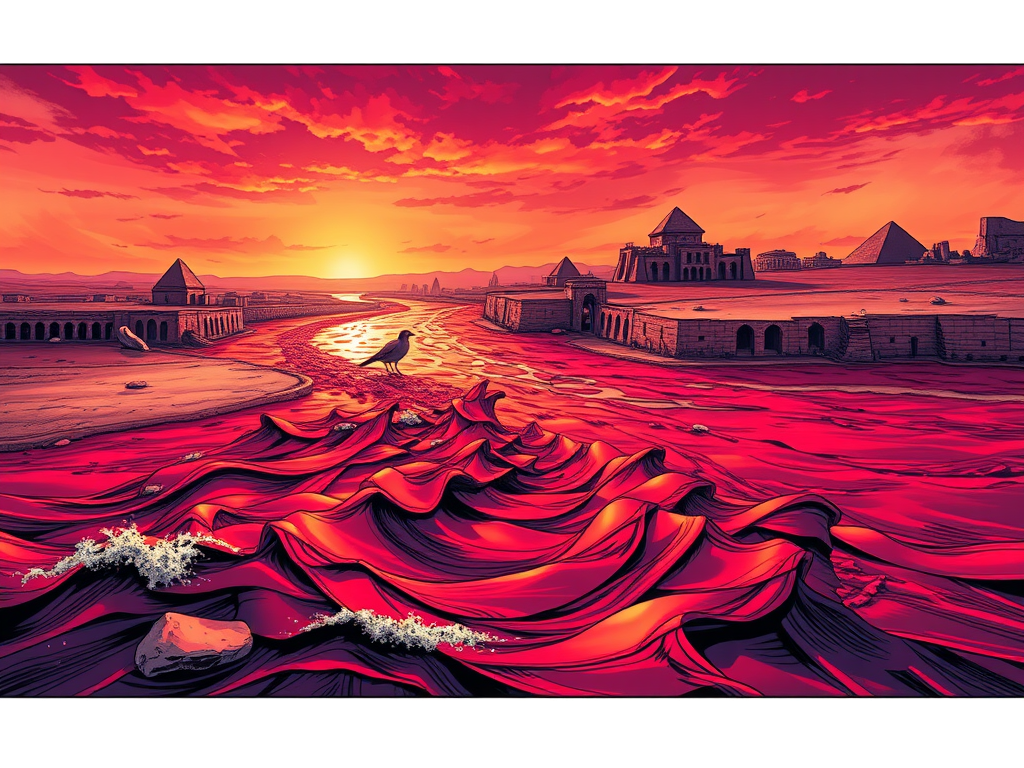
Number 3: This sign is a parallel to the first plague of Egypt
Moses’ first miracle or plague was turning the waters of the Nile into blood. John emphasises that this is Jesus’ first sign, and there is a shared theme of transformation of water here. But there are contrasts too. Jesus performs his miracle in secret, but Moses went out openly and struck the River Nile with his staff.
Number 4: It is a foreshadowing of Jesus’ sacrifice
There are similarities between Moses’ first plague in Egypt and Jesus’ first sign, particularly the Passover. In Egypt, the first plague led to God sending the Angel of Death to strike the firstborn in every home, except those of the Israelites, who marked their doorposts with lambs’ blood. The Angel of Death passed over these homes. Jews have since celebrated the Passover anniversary.
Jesus sacrificed himself during Passover, a celebration of God’s people’s freedom. His first sign symbolises this freedom.
The other points are:
Number 1: It’s an endorsement of marriage
Number 2: Christ’s sovereignty
Number 5: The water of purification deals with sin
Number 6: Jesus’ power over creation
Number 7: Transformation not just of people but of nature.
Number 8: Signs not miracles
< Previous | The Gospel of John | Next >

