
What is so important about grass?
Who is Jesus? part 61 – John 6:1-14 part 1
When I fly abroad or take the train, I’m always impressed by how green my country is. The UK is very green, and even urban areas that cover a small part of our land used to be green. We have National Parks and Areas of Outstanding Natural Beauty. I live a short, steep bike ride from the moors between Huddersfield and Greater Manchester, which, while not designated in the above, have their own rugged charm. Also, the view from the train between Stalybridge and the Standedge Tunnel is worth the ticket price.
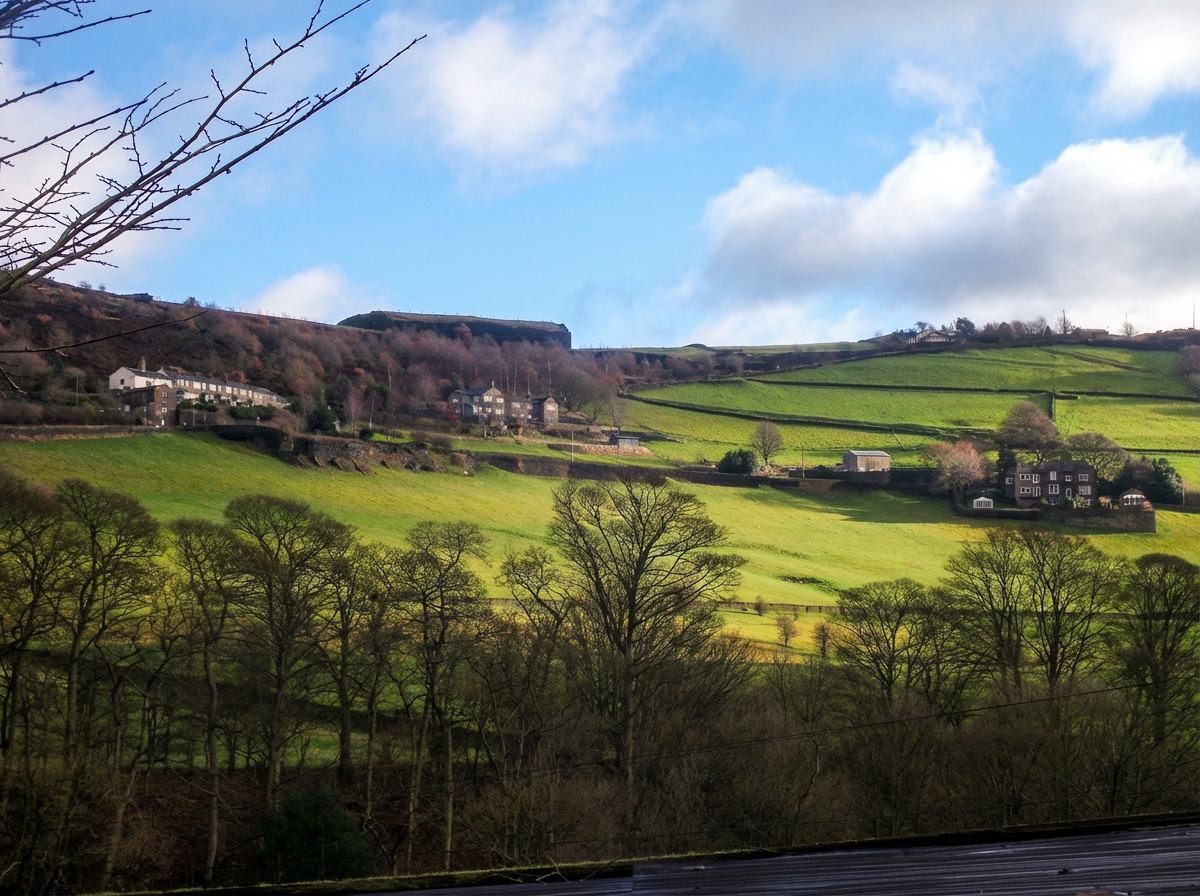
What follows is what happened when Jesus took his disciples to a green, beautiful place. Unfortunately I could not find any copyright free images of the Majrace Nature Reserve, where the crowd followed Jesus and the disciples, so instead here is a picture I took of Nidderdale from near Glasshouses, which is another green place.
6 After this Jesus went away to the other side of the Sea of Galilee, which is the Sea of Tiberias. 2 And a large crowd was following him, because they saw the signs that he was doing on the sick.
3 Jesus went up on the mountain, and there he sat down with his disciples. 4 Now the Passover, the feast of the Jews, was at hand. 5 Lifting up his eyes, then, and seeing that a large crowd was coming towards him, Jesus said to Philip, “Where are we to buy bread, so that these people may eat?” 6 He said this to test him, for he himself knew what he would do. 7 Philip answered him, “Two hundred denarii would not buy enough bread for each of them to get a little.”
8 One of his disciples, Andrew, Simon Peter’s brother, said to him, 9 “There is a boy here who has five barley loaves and two fish, but what are they for so many?”
10 Jesus said, “Make the people sit down.”
Now there was much grass in the place.
So the men sat down, about five thousand in number.
11 Jesus then took the loaves, and when he had given thanks, he distributed them to those who were seated. So also the fish, as much as they wanted.
12 And when they had eaten their fill, he told his disciples, “Gather up the leftover fragments, that nothing may be lost.” 13 So they gathered them up and filled twelve baskets with fragments from the five barley loaves left by those who had eaten.
14 When the people saw the sign that he had done, they said, “This is indeed the Prophet who is to come into the world!”
John 6:1-14 ESVUK
In the English Standard Version (Anglicised) I used, this passage is one paragraph. I haven’t changed the wording, but I’ve divided it into smaller parts, using italics for repeated phrases and bold for the central section to show its chiasmus structure. Chiasmus, which means crossing over, is commonly found in Psalms and the New Testament. It involves repeating similar ideas in reverse order, with the central section often representing the main theme.
These are the repeated words:
A. they saw the signs that he was doing on the sick
A’. the people saw the sign that he had done
B. Where are we to buy bread, so that these people may eat?
and, would not buy enough bread for each of them to get a little.
B’. they had eaten their fill,
and. fragments … left by those who had eaten.
C. five barley loaves and two fish,
C’. the loaves
and. the fish
D. Make the people sit down
D’. So the men sat down
I was surprised to find that the British word “gobsmacked” better describes my feelings, but it isn’t universally understood. It’s like having your jaw drop in surprise or 😯. The key part that influences everything in the chiasmus is “Now there was much grass in the place.” What could the significance of “much grass” be, whether spiritual or otherwise?
But before that I want to say something about John’s Gospel. There are a lot of details in here, it can be bewildering trying to piece them together, but none of them is wasted. If it’s in John’s Gospel it’s there for a reason.
A lot has happened between the healing at the pool of Bethesda in 5:1-15 and the feeding ogf the 5,000. The story has skipped forwards about a year and the story has moved fron Jerusalem back to Galilee. Mark and Luke’s accounts tell us that Jesus and the discples have been on a long preaching trip, and Matthew adds that Herod is looking for Jesus. Mark 6:30-31, Luke 9:10-11, Matthew 14:1-2.
The feeding of the 5,000 is the only miracle to appear in all four of the Gospel accounts, which makes it very important. John’s version of the story has a poetic form that places grass in the most important part, at the centre.
Why grass? It allows people to relax, similar to a meal. This connects to Psalm 23, “The Lord is my shepherd; I shall not want. He makes me lie down in green pastures. He leads me beside still waters.” The crowd has followed Jesus, and here he makes them recline on grass for a meal. Jesus is acting as the shepherd that David sang about, identifying himself with God.
Jesus’ abundant provision of bread and fish is evident, taking a child’s packed lunch and turning it into enough food for 5,000 people, and to still have 7 large trader’s baskets full of what was discarded. But in focussing on the big things, we may forget the details. There was much grass, more than enough for 5000 people to recine comfortably, (the site is now in or near the Majrace Nature Reserve, a very green place.)
John placing grass at the centre of this story is a reminder that God is in the little things. The rest of chapter 6 is about how the people did not realise this and its consequences.
Over the next few posts I’m going to look at different aspects of the feeding of the 5,000. before moving on.
Do you miss the little things of God and want to see him do big things? If so you are like me, and we are like the crowd that followed Jesus across the lake. I prayed that God will show himself in small ways, and the Spirit said, “I was always there, but you were not seeing,”
< Previous | The Gospel of John | Next >

