
Jesus is the whole sandwich
Who is Jesus? part 68 – John 6:35-40
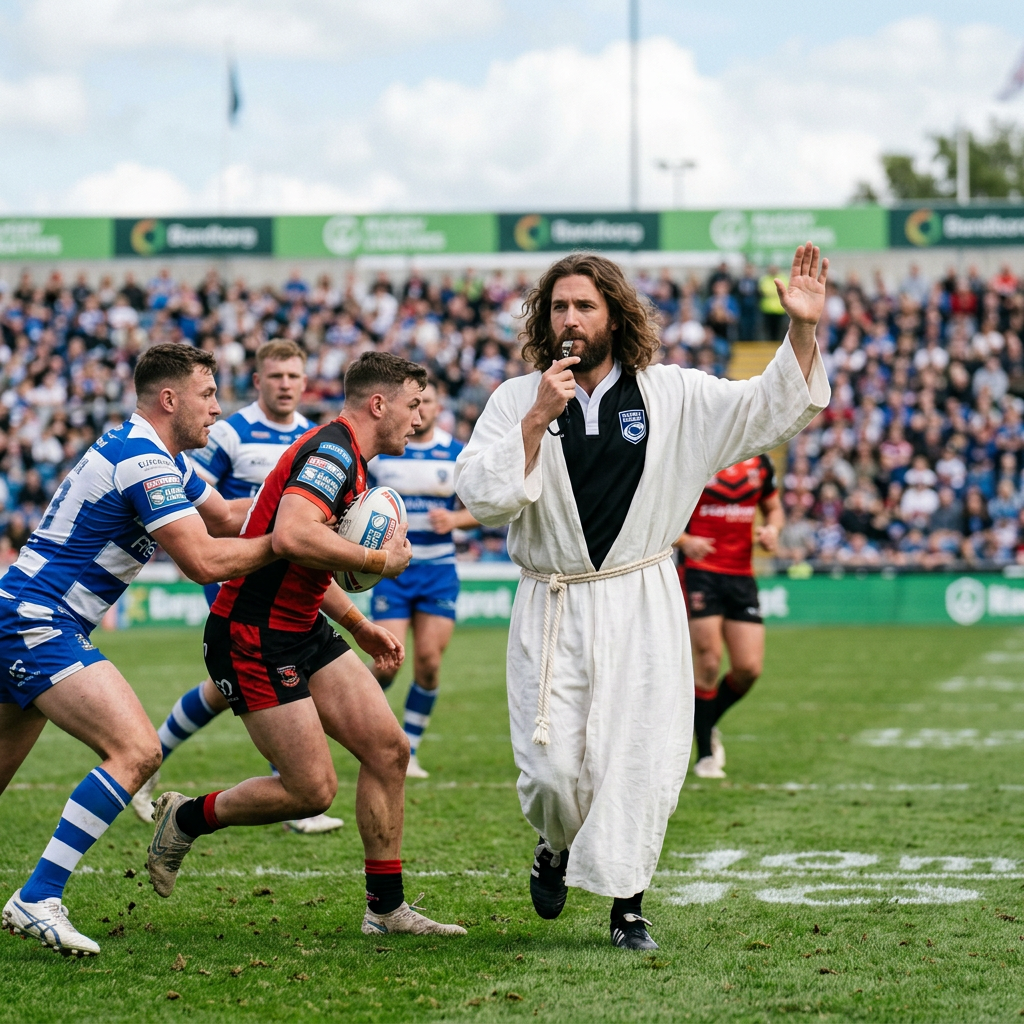
On Friday 22 May 2025 Huddersfield Giants Rugby League team lost 52 0 at Leeds Rhinos. Some say they were lucky to get nil. With a lot of the talk at the club about moving to and affording a new stadium it is easy for the sport to not be the first priority and people will start to grumble. As I have just done.
Jesus’ crowd did not get the result they wanted. So they grumbled.
(On a good note the following day Huddersfield Giants Women won 0 26 at Leigh Leopards.)
35 Jesus said to them, “I am the bread of life; whoever comes to me shall not hunger, and whoever believes in me shall never thirst. 36 But I said to you that you have seen me and yet do not believe. 37 All that the Father gives me will come to me, and whoever comes to me I will never cast out. 38 For I have come down from heaven, not to do my own will but the will of him who sent me. 39 And this is the will of him who sent me, that I should lose nothing of all that he has given me, but raise it up on the last day. 40 For this is the will of my Father, that everyone who looks on the Son and believes in him should have eternal life, and I will raise him up on the last day.”
John 6:35-40 ESV UK
This is where another of John’s themes starts. Seven times Jesus gives statements starting “I am the…” This is the first of these, Jesus says, “I am the bread of life.” – Chapter 6 began with Jesus trying to get away from the crowds in order to teach the disciples, but being followed. Jesus then feeds the whole crowd of thousands with the contents of a boy’s packed lunch. I spent four posts looking at four aspects of this sign and what it tells us about Jesus.
Two posts ago I looked at a passage where Jesus walks on the lake and teleports the boat immediately to shore. As this happened between Jesus feeding the crows mainly with bread and Jesus teaching saying “I am the bread of life.” As these miracles about Jesus’ power over nature happened between two passages about bread, I compared it to the filling in a sandwich.
Then there was the discussion with the people. They were seeking Jesus following being fed, wanting to be fed again. They weren’t looking for Jesus for his teaching nor as a Messiah, their wanted free food, and they spoke about Moses giving the Israelites food in the desert. Jesus offers something better; he offers them a spiritual food that will last forever. It is then that he says something shocking. He says, “I am the bread of life.” Jesus is not only the sandwich filling, able to show the power of God through miracles. Both in the wilderness in Moses time and now, Jesus is the whole sandwich.
Jesus says, “I am the bread of life” three times here in verse 15 and also in verses 48. The life part is important. The Apostle John introduced Jesus this way, “In him was life, and the life was the light of men.” John 1:4 Twice more he will use life in the “I am” statements: Jn 11:1-27 “I am the resurrection and the life,” and in Jn 14:1-14 “I am the way, the truth and the life. Life comes from Jesus Christ, nothing exists without him. 1:3.
I’m skipping to verse 40. “Everyone who looks on the Son and believes in him should have eternal life,” says Jesus, “and I will raise him up on the last day.” The Bible knows nothing about humans leaving their bodies except for visions, the idea that at death the spirit or soul leaves the body to continue in the spiritual realm of heaven is so widely believed in popular culture that even some Christians believe this is what happens at death. Some go further and believe we become angels. This is not biblical Christianity, neither does it occur in the first three centuries of Christian writings. When Jesus said that he would raise believers up on the last day he was talking about us (I am assuming I am among them here) being given new resurrection bodies, like the one Jesus had after his resurrection. Jesus is the pattern for our resurrection. See Paul’s letters, especially, “40 There are heavenly bodies and earthly bodies, but the glory of the heavenly is of one kind, and the glory of the earthly is of another.” 1 Corinthians 15:40, and, “we await a Saviour, the Lord Jesus Christ, 21 who will transform our lowly body to be like his glorious body,” Philippians 3:20-21.
I missed this section because it contains one of my favourite Bible verses. (I know all verses are important and you should not have favourites, but this verse, v 37, has resonated with me for some time. It says, in the words of Jesus, “whoever comes to me I will never cast out.”
John chapter 6 is where Jesus loses his crowd, so I find “cast out” is interesting in its use. The Greek words for cast out, ἐκβάλω ἔξω (ekballo exo) is used in Mather, Mark and Luke’s accounts for when Jesus and his disciples cast out demons. It has a sense of forcefully removing, like in Acts 7:58 where the Judeans cast Stephen out of the city to stone him to death. There is a sense of him being dragged by several people. John does not use ἐκβάλω in regard to demons, but where he does use it the word still has a sense of forcefulness. When Jesus drove the money changers out of the Temple with a whip in 2:15 ἐκβάλω is the word used.
Jesus will not ἐκβάλω ἔξω any body, he will not force anyone out. Those who do leave do so by their own decision. It is important to know that Jesus is not turning anyone away from him here, they have already got their minds set on what they want Jesus to do. They came searching for Jesus for one thing, free food, and now it is clear that is not going to happen they have moved on to something new. As we will see in the next post, their searching has moved on to murmuring.
< Previous | The Gospel of John | Next >

